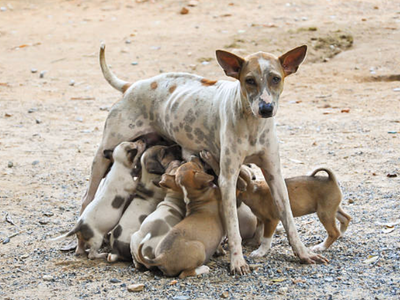
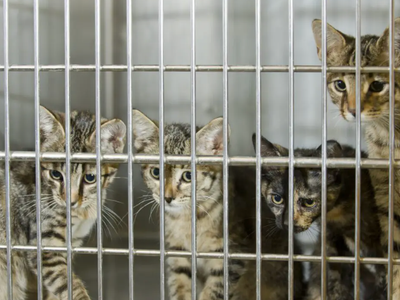
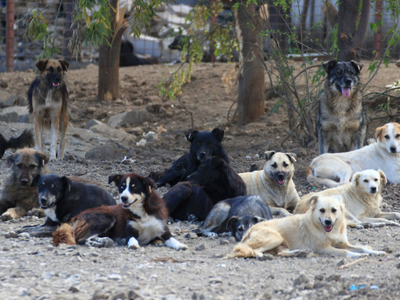
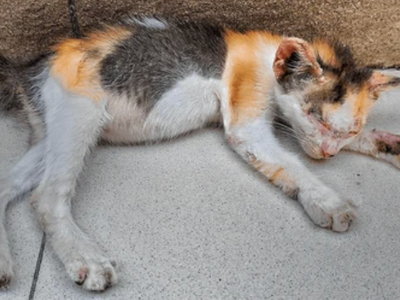
Free-roaming dogs on a street — the scale of companion animal suffering worldwide

A billion animals. One missing solution.

A call to dedicate 10% of companion animal philanthropy to accelerate a breakthrough in nonsurgical contraception and sterilization that could dramatically reduce animal suffering worldwide

~1 Billion cats and dogs roam the planet as US animal shelter intake numbers climb in 2026

An estimated one billion free-roaming cats and dogs face ongoing food insecurity, disease, injury, abuse, extreme weather, and high mortality rates. From an animal welfare standpoint, it is abominable. Meanwhile, the US shelter and rescue system — which targets just 0.5% of that number — is seeing shelter intake numbers climb from 5.8 million animals in 2025 to a projected 7.4 million in 2026.

The status quo is not working.

While sterilization must be at the forefront of addressing this epidemic, we must also recognize the limitations of surgery. Traditional spay/neuter is too costly, logistically complex, and resource-intensive to achieve and sustainably control companion animal overpopulation.

We believe it is philanthropy's moral imperative to proactively pursue another tool in the solutions toolbox with a real sense of urgency.

Addressing animal overpopulation is not an either or conversation. It is not: increase surgical spay/neuter OR proactively pursue nonsurgical sterilization and contraception. It must be both.

Stray dog resting on pavement
Stray dog lying exhausted on street
Stray animal on street
Pack of stray dogs roaming

Our Mission

To catalyze a philanthropic funder collaborative dedicated to accelerating the development of safe, affordable, and scalable nonsurgical contraception and sterilization technologies—with the goal of ending companion animal overpopulation and the extreme suffering that comes with it.

Root cause over symptom relief

We respect and support the shelter and rescue organizations doing essential work. We have worked with and funded them for years. But we believe one of the highest-leverage investments in companion animal welfare today is the one that would make their work unnecessary.

Science over sentiment

We follow the evidence. The case for nonsurgical contraception and sterilization is built on decades of research and field-proven results — not hope. We fund and work to accelerate what the science supports.

Coordination over competition

The gap in nonsurgical contraception and sterilization R&D is not a resource problem — it is an allocation and coordination problem. A coordinated philanthropic commitment could provide the catalytic capital to get there—and ultimately help attract commercial investment. Philanthropy doesn't need to abandon what works today to help create a solution for tomorrow.

Patience as strategy

Breakthrough biotech takes time. We are building for a 5+ year time horizon, not a 12-month grant cycle. Most of the animals who will benefit from this work are not yet born.

Common Objections

Knocking Down the Myths

"Nonsurgical sterilization has been tried and failed."

Nonsurgical contraception and sterilization have been underfunded, not disproven. For nearly two decades, the field’s largest philanthropic funder has committed approximately $1M annually—an extraordinary contribution that helped establish and advance the science. But it is just a fraction of the investment required to bring a biotechnology breakthrough to market. The time has come to build on that foundation with new partners, greater investment, and a coordinated strategy to move promising technologies from research to real-world deployment.

"Shelter Live Release Rate is a good ROI metric."

Shelter Live Release Rate (LRR) alone is not a sufficient measure of animal welfare progress—and can sometimes obscure a troubling reality. A 90%+ LRR tells us little about an animal’s quality of life, prolonged confinement, overcrowding, or behavioral deterioration. In Los Angeles, for example, a reported 90% LRR coexists with persistent shelter overcrowding and serious welfare concerns. Los Angeles Animal Services itself has acknowledged that overcrowding contributes to bite incidents, conflicts between co-housed animals, and other significant humane concerns.

"We already have the solutions we need."

High-volume surgical spay/neuter has played a critical role in reducing U.S. shelter intake, and we wholeheartedly support its continued expansion. But even at its best, surgery addresses just a fraction of the global companion animal overpopulation crisis and its long-term impact depends on sustained funding, infrastructure, and political commitment—none of which can be taken for granted. This is a wake-up call to the  philanthropic sector which has  the unique ability to fund high-risk, high-impact innovation that commercial markets will almost definitely not pursue on their own. With strategic investment and coordinated action, philanthropy can unlock a breakthrough capable of transforming the lives of hundreds of millions of animals worldwide.

The Numbers

The Scale of the Problem

01
~1 Billion
free-roaming cats and dogs worldwide

Facing food insecurity, disease, injury, abuse, extreme weather, and high mortality. The scale of suffering is unthinkable.

02
0.5%
reached by the US shelter and rescue system

The most resourced shelter system in the world addresses an astonishingly small fraction of the global problem.

03
$1M/year
the largest philanthropic investment in nonsurgical R&D To date

An essential investment in establishing and advancing the field, but bringing a breakthrough to market requires a different funding model.

04
5 years
the estimated timeline to market with serious funding

Breakthroughs are not only plausible, they are historically proven possible. The question is whether philanthropy will lead the way.

Free-roaming cats in an authentic outdoor environment
A stray dog looking directly at the camera — a call to action

We're calling for a 10% shift.

Breakthrough biotech requires patience and resources. Both are within reach. The question is whether we're willing to aim high enough.

Breakthrough10

Calling for 10% of companion animal philanthropy to fund the breakthrough nonsurgical contraceptives and sterilants that could change the lives of a billion animals.

© 2026 Breakthrough10. All rights reserved.

A call to action for companion animal philanthropy.